





Business checking
Manage your business
finances seamlessly

What to know before opening a business checking account
Business checking accounts are meant to change as businesses grow, shrink, or advance with technology. Some have transaction limits that become too costly as you grow, balances that must be met if you’re moving into a rough patch, and recurring maintenance fees.
As your company’s needs change, where you host your business checking account can affect how you succeed at each stage. The same goes for opening your first account as a start-up.
As a leading platform for matching business owners with small business financing and services, we’re here with all the information you need about opening a business checking account. Below, you’ll find common questions asked by business owners of all sizes and the information that helps them choose the option that is best for their current stage.

What business checking accounts are
Business checking accounts are bank accounts that allow a company or organization to manage its day-to-day finances including withdrawals, bill payments, vendor payments, deposits, and more, while separating business income and expenses from personal funds to protect them. These accounts can also be used to help you build a business credit score.
They can be connected to payment systems and software to simplify bookkeeping by automating payments to vendors, utility companies, and suppliers. A business bank account can be set up for automatic withdrawals to fund payroll and sync with your accounting software. Companies with a business checking account will have the ability to assign multiple users with different permission and access levels in order to effectively manage invoices and accounting and bookkeeping tasks.

What to consider when comparing checking accounts
How your business accepts payments, how often you receive cash payments, and what vendors you work with can all help you determine the business checking account provider that will work best. And that is why it is important to know what to evaluate and ask yourself before you open an account or change providers.
Ask yourself these five key questions:
- How many monthly transactions do you expect to make?
- What types of transactions do you expect (i.e., cash, check, or credit card payments)?
- Do you invoice clients?
- Will you be using an integrated payment option that includes ACH or credit card?
- Do you need to make cash deposits, or will an online bank provide everything you need?
Most business checking accounts will provide a company with a set number of monthly transactions for free. Then they will charge per transaction or per a set number of transactions. Transactions include deposits, withdrawals, and any other instance where money goes in and out of the account.
Banks, credit unions, and other financial institutions have different processing times and costs associated with transactions, whether they involve cash, checks, credit cards, wires, or ACH payments. If your business currently relies on credit cards and checks, one service provider may have lower fees and could be a better option for you. As your business grows, it may make sense to upgrade your account with the same provider or switch if you find a better offer.
If you change where you have your business bank account, you’ll want to look for a provider with more reasonable fees and processing times. Look at accounts from your current institution and compare them with offers available elsewhere.
The speed at which funds are released can change with different providers. If clients, employees, and vendors are relying on prompt payments, and you need cash clearing into your account quickly to make them, a service provider with shorter clearing times would be best. If you’re already established and have stable cash flows, you may not be concerned with quick transactions and may be able to take advantage of a slower bank that offers other perks.
While most business checking accounts will allow for ACH, business credit cards are a different story. Your business checking account will likely have a debit card, but a credit card will be separate. By having your business checking account with the same issuer as your business credit card, you may be able to get a better offer on a card or to increase your perks and rewards level faster. This can happen because the institution already has access to your financials and will likely value your loyalty.
The last question to ask yourself before opening a business checking account is whether you need an in-person location. If you own a restaurant or convenience store that has customers paying in cash, you’d need to make deposits, so an online bank may not be the best solution as you can’t deposit cash online.
If you only accept credit cards, checks, wires, and digital payments, an online bank with business checking accounts may be more beneficial. These tend to have better rates, lower fees, and more technology due to the reduced overhead costs of not having a physical presence.

Debit card benefits
Most business checking accounts come with a debit card, and while rewards are more common in business credit cards, some debit cards may offer perks like cash back on select purchases as well. Your business checking account may also offer a virtual debit card with a unique account number to use for online purchases. This makes it a good substitute for a business credit card if you are not able to qualify yet.
The debit card will likely come with features including security, account monitoring, and the ability to set spending limits if multiple employees have one. When choosing a bank, it’s important to make sure you have access to these critical features to ensure the protection of your account.
Personal checking accounts vs business checking accounts
Separating your personal checking account from a business checking account is recommended because it protects personal assets from being at risk in case of a lawsuit or the business going into default. For example, during an IRS audit of your business, you’ll be able to simplify the process for the federal agent doing the audit and there will be fewer questions about personal use versus business use as all business expenses and deductions will be tracked in the business account. This helps your accountant at tax time too. The SBA has an easy guide with other tips to separate your finances here.
Note: If you’re looking for financing like a small business loan or investors, the lenders or equity companies are going to want to see your finances. Having a dedicated business checking account with your financial statements makes this easy.
While your personal checking account is easier to open as you won’t need an EIN or business documents—and it may have lower limits on deposit amounts and more free transactions—you risk a lot more by not separating your personal and business checking accounts, especially when it comes to legal and financial protections on your personal funds.

What do I need to open a business bank account?
Typically, there are three things the business bank account provider will require when you open an account:
- Personal information including your name, address, date of birth, and other personal identifiable information (PII), which will be used to verify your identity
- Business information like if your business is incorporated, your Employer Identification Number (EIN), and possibly your business license and any partnership agreements
- Your business credit score (in some instances)
- A credit score check may be required by some banks and credit unions to open an account for your business.
With this information, you can apply for a business checking account online and get a decision quickly. Remember to compare your options and select the bank and checking account that meets your company’s unique needs.
How is a business checking account different from a business savings account?
A business checking account is different from a business savings account in that a savings account can earn interest and make you money, but it may also have a lower limit on the number of transactions you can make during a specific period (including deposits and withdrawals). Both likely come with monthly minimum balances you’ll need to maintain, and both will likely have overdraft fees if you take too much out.
Putting money into a business savings account is good when you have extra cash flow and unexpected gains, as this cash can be stored for a rainy day and grow with interest. Meanwhile, the money in your business checking account is really there to be used for short-term or immediate expenses
Why America’s
SMBs love using SBL
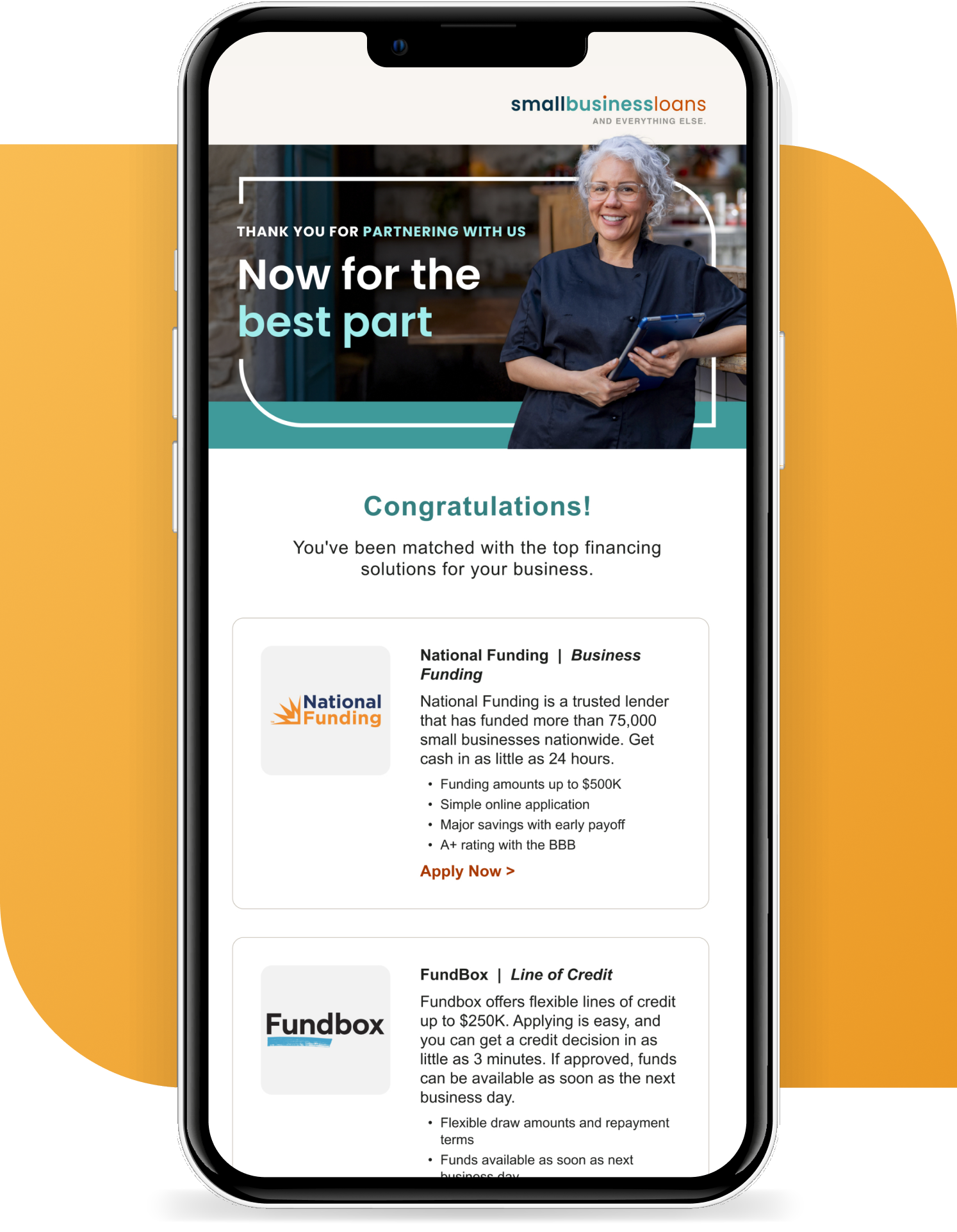
The SmallBusinessLoans marketplace was built to serve small and medium-sized businesses (SMBs). Here’s how our platform sets you up for success.


Tailored solutions: We only match you with products and services that cater to your unique needs and profile.


Trusted partners: All of our partners go through an extensive vetting process, so you can move forward with confidence.


Free service: See all the best solutions for your business without any cost or commitment. It only takes seconds!
